Reworking the Asset System (and Rethinking the Engine)

Before making Kaban Engine public, I started reworking the asset system. What was supposed to be a small, focused change turned into a larger cleanup pass, because once I touched it, several weak spots became obvious. The original goal was simple: end up with a built asset file that the game can load quickly and query efficiently. That meant tightening definitions, removing ambiguity, and enforcing rules. Tags The first thing I tackled was the tag system. ...
December 18, 2025 · 5 min · 983 words · pvlso

Implementing Navigation Meshes

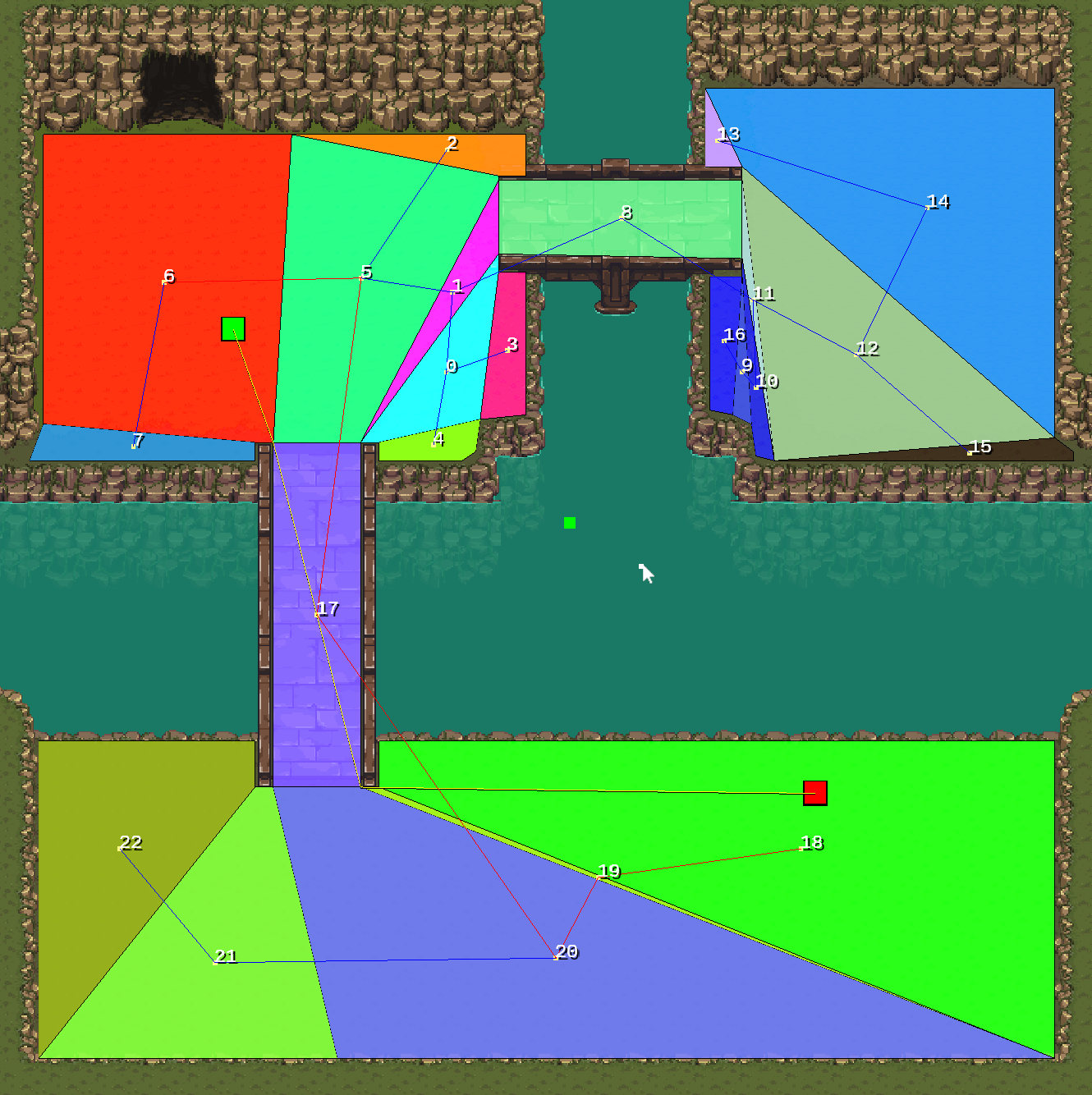
In my previous blog post, I explained what navigation meshes are and why they’re essential for my game. In this post, I’ll walk you through how I implemented this functionality in my game engine, breaking down the process step by step. Step 1: Creating Native Polygons The foundation of the navigation mesh is a set of “native” polygons that define all walkable areas in the game. I call them “native” because the mesh generation process relies on them. To create these polygons, I added tools to draw, edit, and save them within the engine. For now, this manual approach works well since the map is relatively small, but I’m considering automating this process in the future to handle larger or more complex maps. ...

June 1, 2025 · 10 min · 2110 words · pvlso

Progress on Navigation Meshes for Map Editing Mode

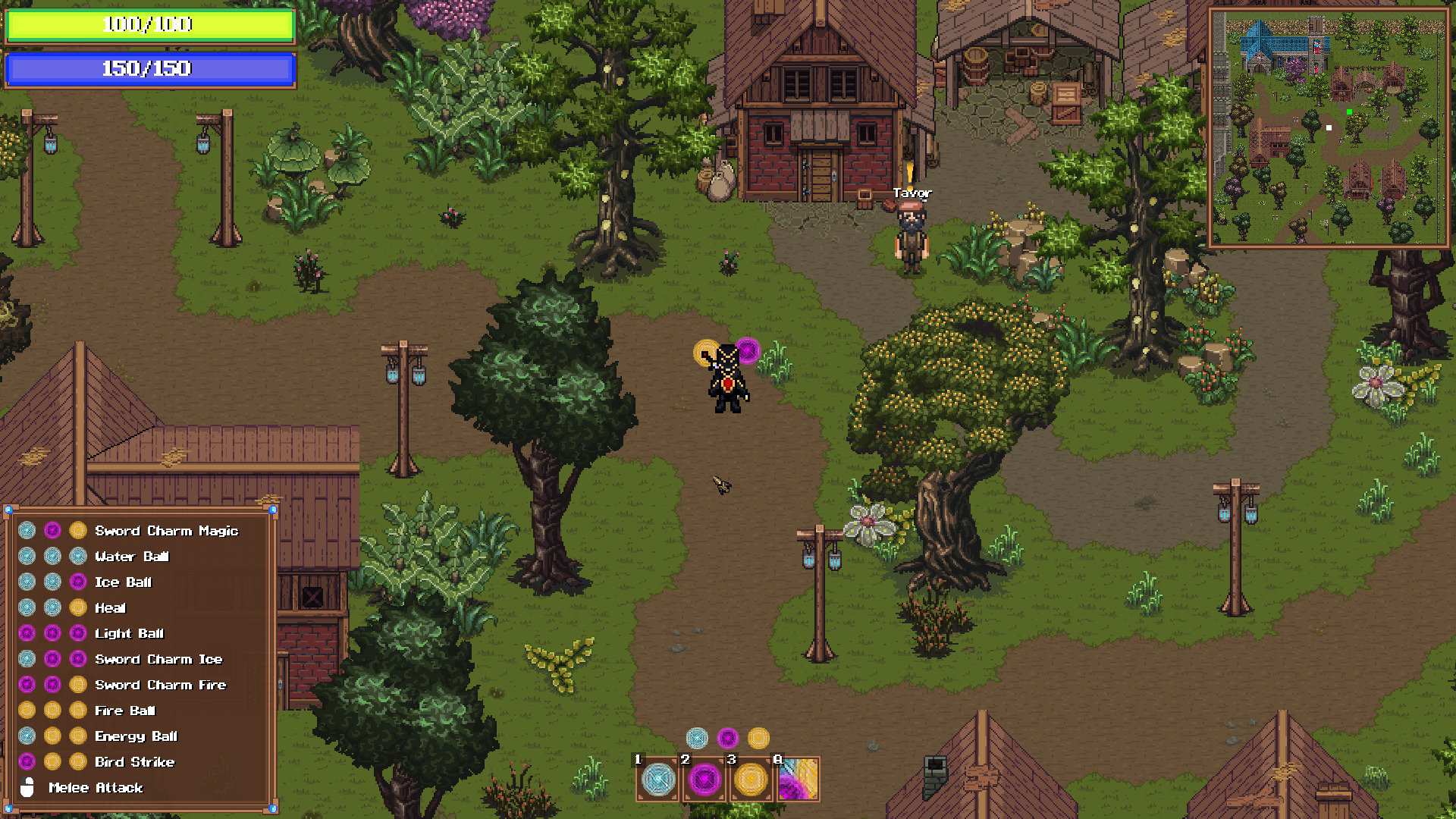
Over the past few weeks, I’ve made significant progress on the navigation mesh system for my map editing mode, a core feature for creating interactive game levels. This post dives into why I chose navigation meshes, the details of what I’ve built, the challenges I’ve faced, and the next steps I’m tackling. For those unfamiliar, the map editing mode in my game engine allows users to design game environments, including ground tiles, entity placement, and navigation meshes. My current focus is on navigation meshes, which are critical for enabling entities to move intelligently within the environment. Let’s explore the motivation behind this choice and my recent progress. ...

May 24, 2025 · 5 min · 930 words · pvlso

Assets Edit Mode

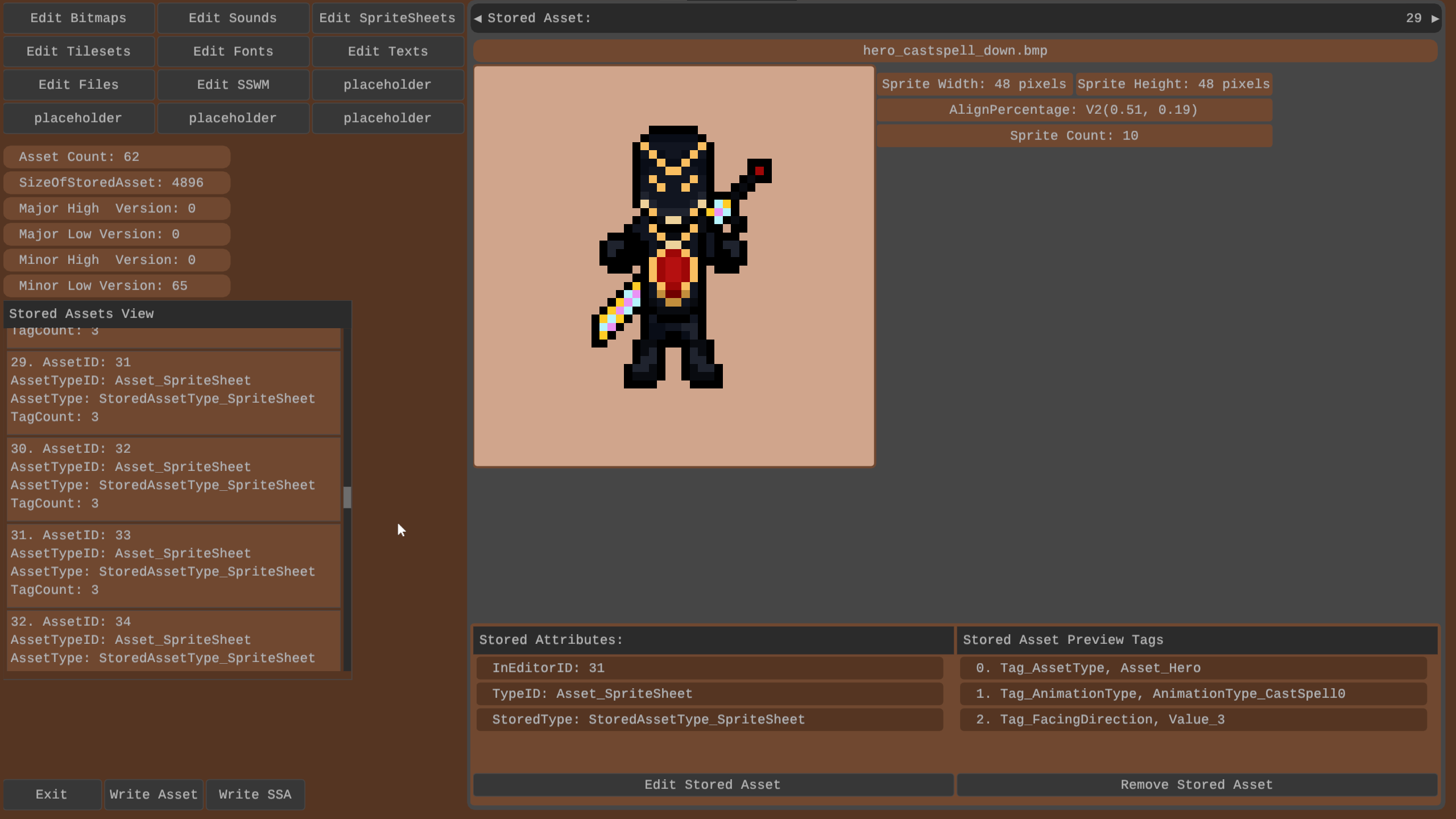
After completing my initial demo for my school capstone project, I set out to transform my work into a proper game engine, prioritizing ease of use and flexibility. My first focus was enhancing asset management and map editing. During the demo’s development, I built a basic tilemap editor that allowed me to place tiles, define collision boxes, and add static entities like trees, stones, and houses—represented as textures with collision data. It worked, but it lacked a user interface, undo/redo functionality, and advanced features like object manipulation or in-editor simulation with a player character. The output was three binary files—tile_map.bin, decorations.bin, and collisions.bin—containing tile textures, entity placements, and collision data. ...

April 12, 2025 · 4 min · 696 words · pvlso

Clipper2 Reimplementation

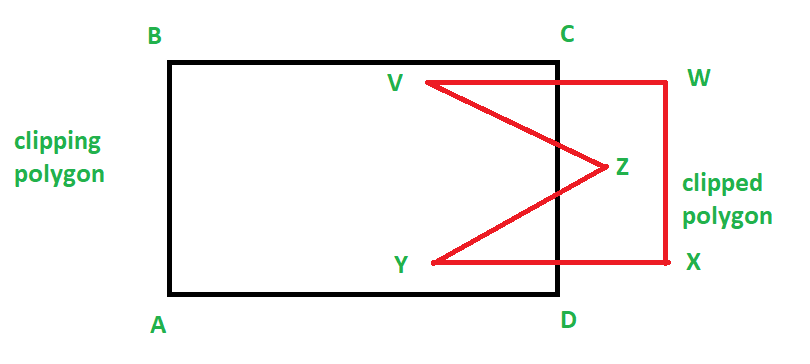
While developing the navigation meshes for my game, I ran into a persistent issue: clipping polygons. I initially implemented a polygon subtraction algorithm that worked well for most cases, but it quickly became apparent that there might be a better approach to polygon clipping. Inspiration from Godot Engine After taking a short break from game development, I decided to dig into the Godot game engine, specifically its latest version, which includes navigation mesh support. After setting up everything in the debugger, I discovered the library Godot uses for polygon clipping. At first, I was confused by how it worked and why it was implemented that way. But after reading the documentation and doing some research, I gained a clearer understanding. ...

October 23, 2024 · 3 min · 574 words · pvlso